Friday, 5 May 2017

The Greater Good


I have been watching season 4 of the apocalyptic sci-fi series The 100. One of the reasons I like this series regardless of the plot flaws, is that it tackles some big ethical questions.

For those who are unfamiliar with the story-line, the earth has suffered a nuclear war and a number of people survived due to being put on (or born on) the Ark – a space station designed to keep people alive until the earth became habitable again.
Since then, people from the Ark have returned to the earth to discover not only is it habitable but there are other survivors. Their survival is continually threatened and leaders find themselves facing difficult ethical dilemmas.
Currently, armed with the knowledge that deadly radiation is coming their way, one leader must decide which 100 people will gain access to Archadia (a section of the Ark that came to earth). There are at least 500 people but only 100 can be sustained on the ark for the guesstimated time to avoid the radiation. One leader faces the unenviable task of choosing who survives. She bases her choices on the utility of people and the greater good.

The phrase ‘the greater good’ originates from a philosophical theory known as Utilitarianism. Utilitarianism says that actions themselves are neither morally right nor wrong; therefore moral decisions should be made based on the outcome of an action. Potential outcomes should be evaluated to see which will bring about the greatest good for the greatest number. So a scenario where a bomber is tortured to locate the bomb is regarded as a moral action because the pain of one person is worth saving the lives of hundreds of others.

One of the problems with this ethical theory is that it relies on future knowledge. When I am torturing the bomber, I have no real idea whether my actions are in fact saving hundreds of lives. It may be that the location of the bomb will be discovered, but it goes off anyway, hundreds die and one person was tortured.

Peter Singer, a modern utilitarian, believes that this theory can help us reflect on our actions so they benefit the wider community not just ourselves or our nearest and dearest. His views were discussed as part of the A level curriculum I used to teach and a lot of the material made him seem rather fanatical and impractical (I guess that makes for more interesting discussions and essays). I was surprised to discover a more empathic response from him in an interview that focuses on the ethics of our food choices. In this he recognises the pressure to conform to society's norms but he encourages everyone to reflect on their actions and to try to minimize the harm that they are causing. For example, choosing to eat meat everyday has ramifcations for both the environment and those who are in developing countries, for whom meat is a luxury rather than an expectation.


I do not fully agree with Singer’s worldview, as he has some rather controversial views about animals, foetus’ and disability but I find his questions about our impact on the environment and on others thought-provoking and challenging.

As far as I know, I have never made a life or death decision that has directly affected the lives of others. However there are lots of decisions I make where I am unaware of the full extent of the consequences, but this does not stop me making those decisions. I’m thinking about my choices as a consumer. It has got me thinking about the decisions I make that do have an impact on others, on the environment and its future. I don’t have many answers, but I am enjoying grappling with these issues and trying to find a realistic, thoughtful way forwards.

Is the greater good a useful way of approaching ethical decisions?
How important is it to consider ourselves as global citizens with a responsibility to one another?
Are consequences more important than the action itself?

Saturday, 22 April 2017

Look a little deeper


The other day I was looking through our bedroom window – this is not a natural place from which to observe as it is directly above the bed and it is only from the bed that you get a good view. It looks out onto our drive and the street. But if you look up and beyond our street there is a flag and beyond that are clouds of green from distant trees. We have lived here for over four years and I don’t think I have ever seen that flag or the trees in the distance before. It got me thinking about what else I miss because I am quick to look but don’t take time to observe.

Aristotle applauded the skill of observation. For him, what we can see, hear, taste, feel & smell are the concrete signs of truth around us. Plato’s view that our changing world could not be trusted because everything is in a state of flux did not make sense to Aristotle. Aristotle believed that it made more sense to trust in what could be observed rather than some imagined ideal state existing beyond our world. I’m not sure I fully agree with either of them but I am learning the benefit of greater observation. It is not just my sight that has been affected. I have changed my eating habits so that for a longer period of time I am fasting in the day. When I break my fast for the day, the experience of taste is heightened. Initially I wanted to wolf down anything and everything and I would waste time thinking about what food I was going to have. I am neither rushing nor being particularly mindful and slow when it comes to eating, but I am aware that there is a greater sense of enjoyment in those first bites. There is a greater sense of appreciation in the variety of food that I could eat. I no longer feel constrained by meals that are typical breakfasts or lunches and there is something very freeing in that.

The old adage ‘seeing is believing’ has been found wanting, but seeing, really looking, takes us closer to understanding which questions need asking. This is true in science. Observation leads to hypothesis leads to asking the right questions and experimenting to discover the answers. I wonder what questions and answers I have missed because I failed to really look. People are communicating with us all the time, sometimes it’s with their words but most of the time they are relying on us to look, to really see what needs asking rather than relying on the trite clichéd questions that often fall out of our mouths.

During the Easter weekend I spent some time flicking through the Guardian’s magazine series ‘Do Something’. One of the activities that jumped out at me was street photography. I thought that this would be a great way to put my desire for greater observation into focus! I decided that I would take photos of the same part of our high street at regular intervals in the day and observe the changes that occurred.
It was daunting holding up a camera to capture people in my chosen scene. No one asked what I was doing, and as the day progressed I felt more confident in my role as photographer, capturing moments, looking for the details.


We all have the ability to make discoveries through observation. They might not be world-changing scientific ones, but they might be ones that change our world and the people around us. Taking notice has increased my sense of wonder and appreciation.

Leisure
What is this life if, full of care,
We have no time to stand and stare.
No time to stand beneath the boughs
And stare as long as sheep or cows.
No time to see, when woods we pass,
Where squirrels hide their nuts in grass.
No time to see, in broad daylight,
Streams full of stars, like skies at night.
No time to turn at Beauty's glance,
And watch her feet, how they can dance.
No time to wait till her mouth can
Enrich that smile her eyes began.
A poor life this if, full of care,
We have no time to stand and stare.
William Henry Davies

Saturday, 8 April 2017

Be More Teen


‘Good habits formed at youth make all the difference.’ Aristotle

Teenagers get a bad press: selfish, loud, moody, aggressive, messy, irresponsible - the list could go on. The reality is more complex than this. Teenagers often express total contradictions: intense and playful, sensitive and thoughtless, dreamers and doers. Interestingly, many of these attributes are essential for creativity.

Over the last few weeks, for various reasons, I have been thinking back to my school days and teenage years. This has not always been a pleasant exercise – school was not my favourite place to be. I can remember making myself sick in order to stay at home. I experienced bullying at both primary and secondary school. The walk down memory lane was not a journey for re-living these experiences. I was looking for my best moments, the times when I felt truly alive.


‘Adolescence is a new birth, for the higher and more completely human traits are now born.’ 
G. Stanley Hall.


 As adults, if we think about reliving our teenager years it is associated with bad taste. Whether it’s clothes or hairstyles, buying the fast car we dreamed of owning or attending an event where some tribute band are playing the tunes you rocked out to, there is the memory of freedom perhaps even rebellion.

I’ve been searching for the lost and forgotten dreams. The activities that made me feel free. These teenager years are often referred to as our formative ones because they are so crucial to creating the person we are today. When I look back there are definitely passions or capabilities that I have forgotten. These have been overlooked or discarded because the responsibilities of adulthood have taken over.

A simple example that I rediscovered recently was the joy of being on a swing. I was in someone else’s garden and there at the bottom was a huge tree, from it dangled a swing. The sun was out and the garden was bathed in spring-time glory but more than the comfy looking bench, the walk through a woodland area or the beauty of the flowers themselves, it was the swing that called out to me. Tentatively, I asked permission to sit and swing. (I had thought perhaps it was just for children). I was greeted with surprise and then a smile ‘Of course you can use the swing!’ So I indulged, gently at first and then with greater abandon. My eyes took in the garden from an entirely new view-point and then I closed them, enjoying the tingle of not knowing exactly where I was going.

I have taken some time to think back, to make a list and consider what was and what has been lost. Some of what I have rediscovered has affirmed my current choices. Others have been surprises and encouragements to try forgotten activities and reclaim passions that have been dormant.

As I look back, time and friendships appear to be different. Now, I make appointments to meet up with friends and usually they involve some kind of plan; dinner, drinks, cinema etc. Then, everything seemed more fluid (this may be poor remembering on my part) but there were definitely times of just ‘hanging out’ no plans, no agenda except to spend time with my friend. Sometimes the best times were those unplanned ones.

Time is a gift. It is up to us to decide what we will do with it. This is easier said than done and even with all my ‘flexible’ time, I am still learning about time management. Prioritising the important is my new habit. I now block out periods of time in advance so that they can be devoted to something I do not feel I have enough time for. I physically do it in my diary and I am finding it works. My husband and I have done the same for time together too. Nothing is to infringe on that time without permission from the other. There is no agenda for these times together and I think that is part of what makes them really special.


‘It takes courage to grow up and become who you really are.’ E. E. Cummings

What passion or skill has been dormant since your teenage years?
How could ‘hanging out’ with no agenda benefit your relationships?
What activity would you like to try to recapture that feeling of youthful freedom?

P.S. The novel is progressing (slowly) and I will shortly be introducing you to my new blog project, so watch this space.....

Saturday, 25 February 2017

Contentment vs Happiness


This week I read an article about whether spending money makes people happy. The article looked at the lives of six women; each on a different salary and with different spending habits. One woman, a millionaire author, does not own a house or a car and says that she can fit all of her belongings in a large plastic box. As I read it, I was sceptical, but Amanda Prowse says this is how she has discovered what has real value and what makes her happy.

Intrigued, I did a little research and came across another writer who has purged her house to the extent that she can fit all of her day-to-day items in a cardboard box. For her, this has been a journey of self-discovery that has affected her relationships, eating & spending habits and her thought life. The idea has some appeal to me, although it would require much more extreme action than my wardrobe clear-out in early December. Realistically, I know there is more than a box of books I would struggle to chuck out and there is a bit of a squirrel inside me that says ‘that might be useful one day.’

These women, having sifted through their belongings seem to have come to a quiet contentment about ‘stuff’ which I find both admirable and enviable. There are many voices competing for our attention and many of them are telling us that we do not have enough or we do not have the right thing and if we could just acquire this ‘thing’ we would be happy. Even though I know this is a total swizz and none of these voices actually care about my happiness or wellbeing there is a part of me that believes them and I get sucked in. I live in a state of discontentment.

While there are a few quiet voices calling us to mindfulness and to slow down, the general message is ‘earn more money, buy more experiences, acquire the new stuff – get busy.’ We do place a high value on busyness and the ultimate consequence of this is that people get shut out. I know that previously in my own friendships, people have felt I was unavailable due to my busyness. That makes me sad; I don’t want to be that busy person.

I have been thinking about happiness and contentment and the difference between the two. Some definitions imply they are more or less the same thing. I have always thought there is a transitory quality to happiness, whereas contentment feels more solid and lasting; more of a life-style than a feeling. One definition that I came across explained contentment as a state of satisfaction that is not disturbed by the desire of anything more or anything different. This seems to be at odds with growth and development of oneself but I think if applied to the general state of one’s life this could be truly liberating. That sense of truly enjoying the present for what it brings. 


There is so much I am complacent about because my thoughts are either anchored in the past or second-guessing the future. I have heard people recommend ‘gratitude journals’ to aid thinking in the present and to develop contentment. Whilst I have not created a journal for this purpose, I have found it useful, on those days that feel grey, regardless of the weather, to spend five minutes writing a list of all the things I am thankful for. It can take time getting started but then it can be difficult to stop! As I look back over some of the lists I am struck by how much I take for granted and how little things like a friendly text, the smell of hyacinths, a good cup of tea really do make a difference but are so easy to overlook.

Which is better, happiness or contentment?
What are you grateful for today?
What other activities lead you towards contentment?


I am now starting a six week break from blogging. This is partly due to finding momentum for my novel and I want to focus on that but also because I have been thinking about a different direction for the blog and want some time to consider this.

Saturday, 18 February 2017

Just Say No!


‘Just say no’ was the mantra used by my school as part of our drugs education. In my experience there is no ‘just’ about it. Saying no is difficult and requires courage.

Aristotle lists courage as an important virtue that people should try and develop. Fear is often seen as the opposite of courage, but Aristotle believed that there are things we should fear. One example he gives is fearing the loss of a good reputation. So fear in and of itself is not the antithesis of courage. Aristotle created the idea of the Golden Mean; this is the midway point between two vices. In the case of courage he believes that we need to find the point between cowardice (the deficiency of courage) and rashness (the excess of courage). In Ancient Greece the ultimate way of showing courage was in battle; to die in battle or to overcome the enemy was the highest honour.

Desmond Doss’ real life story is portrayed in the film Hacksaw Ridge. Here is a man who is willing to die for his country but is unwilling to take up a weapon to do so. He is labelled a coward and thought to be insane but he continues to stay true to his beliefs. There is a point in the film where he is given an ultimatum; to obey his commanding officer and show how a gun works or go to prison. He agonises over the choice as it is his heart’s desire to serve his country but he wants to remain true to his convictions. While watching his anguish, I am willing him to say ‘yes’ to the command, to just show them he knows how to use a gun. Then he’ll get his opportunity to serve as a medic on the front line. He refuses. I won’t tell you what happens next but his story is powerful one of courage and being true to yourself.

Often I think of being courageous as saying ‘yes’ to things; facing a fear, trying something new, making the most of an opportunity but lately I am finding that sometimes it takes courage to say ‘no’. I saw a wise friend of mine this week who had had to give up a number of activities where she was being successful for personal reasons. The time came when she was able to return to the things she had previously been involved in. Rather than picking up where she had left off, she felt a strong sense that she should just do one of those things. It was a hard decision because she loves to say ‘yes’ and she was really good at all the projects still available to her. Since then, she told me that her ability in the one activity she said yes to has increased and she can see this was the best and wisest choice for her.

I like to say ‘yes’ and with a more flexible timetable it is so tempting to do so, but I have felt challenged this week about whether I am saying ‘yes’ to the right things. I often see the need and think ‘Ooh, I could do that and if I don’t perhaps no one else will.’ I wonder how often I’ve trampled on someone else’s opportunity in order to add another ‘string to my bow’. My willingness to volunteer, to say ‘yes’ stems from compassion but underneath that lies the desire to be noticed, to have purpose. There’s a fear within me that if I don’t put my hand up, I will not be seen. Ultimately I fear not being loved.

So I am attempting to be courageous, to pick through the things I am currently doing and ask the question ‘Is this the right thing for now?’ This is just the first step, the harder part will be saying ‘no’ and letting go of the things that are not meant for me.

 
Have you experienced choices when it has been hard to say ‘No’? What happened?
What do you think is the greatest expression of courage?

Monday, 13 February 2017

Waiting For Wisdom


What if every test of endurance is less about achieving the goal and more about gaining experience and as a result, wisdom?

I’ve been back in the garden recently and what looked dead is now slowly coming back to life. If I only looked for the flowers or the fruit, I would miss so much of the beauty of the whole process. Tiny buds of potential, bright green shoots fighting their way through the heavy, wet earth reveal that although the big picture is still stripped bare, closer to the surface there is a lot going on and there is still more than my eyes don’t see.

I’m beginning to see the same is true for you and me. We spend so much time focused on the ‘fruit’, the goal that we miss the process. I have begun to question; what if there’s no ‘fruit’ – no creative community built through mindfulness and art – no published book. Would it still be worth it? I am beginning to conclude that the answer is ‘Yes!’ It will be worth it because of all the new relationships that are being forged, all the new things I am learning. It will be worth it for the experience.

Gaining experience is the focus of many advertising campaigns, often it seems with the purpose of allowing us to post the gratifying photo on Facebook.  But experience has a more profound purpose than becoming an anecdote on our Twitter feed; experience takes us deeper into the human condition. This is the precursor to wisdom.

Wisdom does not hold a prominent position in our culture. It is not taught in schools, it is not discussed in the mass media, it has been sidelined to the domains of philosophy and religion. The Ancient Greeks were certainly fans of wisdom but more than that it was something they actively sought after. For Aristotle, one of the Greek words for wisdom, sophia, (the act of reasoning, discovering and questioning) was limited if it did not lead to phronesis (practical wisdom – the ability to weigh up situations and act benevolently).

What a difference it would make if we paused to think about the events, choices and circumstances of our lives and considered what they might be teaching us, how we might do things better in the future and how our future choices could benefit others.

No doubt all of the world’s a stage, but you and I are involved in the task of improvisation rather than learning our lines. Each scene, each experience can take us forwards towards wisdom and compassion if we make the choice not to rush the finale but to see each scene as an opportunity to connect with the other players, with ourselves, with the set-designer.


Whilst thinking about endurance and achieving goals. I came across this definition for endurance ‘the capacity of something to last or to withstand wear and tear’. It’s referring to objects, but I really love it as a definition for myself and the things I am creating in my life. In a world where everything is disposable, including it seems relationships, and people, I want to create things that will last. Trouble and difficulty are inevitable, sometimes it seems like the solutions to these problems are to give up or to get a new one. Enduring the tough times, dealing with the confrontations, making the difficult decisions creates something more beautiful and valuable than simple moving on to something or someone new.


How can we gain more wisdom?
How can we help each other develop practical wisdom from our experience?
Who do you look to for wisdom?


Friday, 3 February 2017

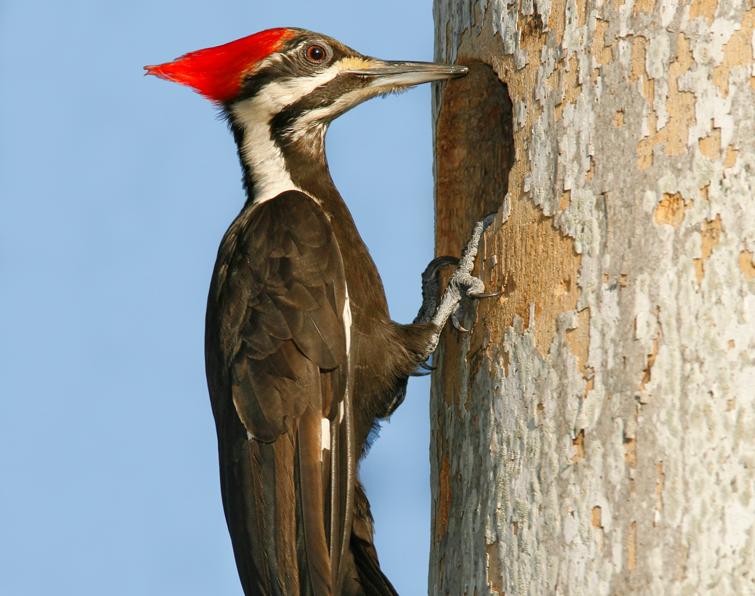
Keep your pecker up!

Image result for the woodpecker owes his success 
 ‘Even the woodpecker owes his success to the fact that he uses his head and keeps pecking away until he finishes the job he starts.’ (Coleman Cox)

Maybe it’s the perpetual grey, the drizzle or the cold that even on the milder days seeps into your bones; the last few weeks have been tough.

I’ve always worked well with deadlines, but it is much harder when these are self-imposed. I have always enjoyed balancing a number of (usually unrelated) activities in life and my new routine is no exception. With such variety it can be hard to see whether progress is being made and whether each task is worth the time and effort that it takes.

Aristotle extols the benefits of developing virtues in order to truly flourish. One of these is courage. In Aristotle’s teaching this is more than being brave; it also means to endure.
 ‘Change is hardest at the beginning, messiest in the middle and best at the end.’Robin S. Sharma


The difficulty is, not knowing the stage you’re at. School gives very tangible markers for progress. Ticking off the lessons, counting down the days to exams or till the beginning of the holidays, each one provides boundaries as to where one is in the endurance test of education. Persevering is not necessarily easy but you can see where you’re going and how long it’s going to get to take there.

Life consists of markers too, but sometimes the timing is off. For a number of friends the milestones of marriage or having a baby have not come at the time they would wish. In such circumstances it is difficult to know whether to give up or to endure, hoping that your time will come.

Persevering when the outcome is uncertain is tough. The mantra to keep on keeping on sounds hollow and going back to what is safe looks inviting. It is often the case that hindsight allows us to see that progress was being made. It is when we look back we see the glimmers of hope or success.

I saw my first snowdrops this week and made a plan to see if any had appeared in the garden. As it was sunny, I decided I would do some gardening as well as look for snowdrops. Initially I didn’t see any, it was only as I stepped back to look at the improvement my weeding had made that I saw the tinniest strands of green bending under the weight of the white bells. It is worth taking time to search for the snowdrops, to stand back and really look. 


‘Prepare’ and ‘Reflect’ are my new action words. I have diversified my reading since leaving teaching and have a spiritual, fictional and philosophical book on the go at all times. I often start the day with a chapter from my spiritual book. I sometimes think ‘I don’t have time, I need to get on.’ Yet, when I take the time, not only to read but to consider and write down any thoughts, the rest of the day always seems more productive. I now view this time as ‘preparation’ for the day.

A while ago my husband decided to write down any events that made us happy or grateful on a piece of paper. These were kept in a box and at the end of the year we went through the papers. There was joy in remembering these times together but also surprise in how much we had forgotten. It is all too easy to gloss over or forget the good moments, but I think these things fuel our endurance, so that during the harder times, it is easier to see that ‘this too will pass’. I think I am going to reintroduce this, if not for the two of us, then definitely for me.


How do you keep persevering?
How important is endurance when it comes to being courageous?
What helps you enjoy the journey when the destination seems out of reach?