Saturday, 18 February 2017

Just Say No!


‘Just say no’ was the mantra used by my school as part of our drugs education. In my experience there is no ‘just’ about it. Saying no is difficult and requires courage.

Aristotle lists courage as an important virtue that people should try and develop. Fear is often seen as the opposite of courage, but Aristotle believed that there are things we should fear. One example he gives is fearing the loss of a good reputation. So fear in and of itself is not the antithesis of courage. Aristotle created the idea of the Golden Mean; this is the midway point between two vices. In the case of courage he believes that we need to find the point between cowardice (the deficiency of courage) and rashness (the excess of courage). In Ancient Greece the ultimate way of showing courage was in battle; to die in battle or to overcome the enemy was the highest honour.

Desmond Doss’ real life story is portrayed in the film Hacksaw Ridge. Here is a man who is willing to die for his country but is unwilling to take up a weapon to do so. He is labelled a coward and thought to be insane but he continues to stay true to his beliefs. There is a point in the film where he is given an ultimatum; to obey his commanding officer and show how a gun works or go to prison. He agonises over the choice as it is his heart’s desire to serve his country but he wants to remain true to his convictions. While watching his anguish, I am willing him to say ‘yes’ to the command, to just show them he knows how to use a gun. Then he’ll get his opportunity to serve as a medic on the front line. He refuses. I won’t tell you what happens next but his story is powerful one of courage and being true to yourself.

Often I think of being courageous as saying ‘yes’ to things; facing a fear, trying something new, making the most of an opportunity but lately I am finding that sometimes it takes courage to say ‘no’. I saw a wise friend of mine this week who had had to give up a number of activities where she was being successful for personal reasons. The time came when she was able to return to the things she had previously been involved in. Rather than picking up where she had left off, she felt a strong sense that she should just do one of those things. It was a hard decision because she loves to say ‘yes’ and she was really good at all the projects still available to her. Since then, she told me that her ability in the one activity she said yes to has increased and she can see this was the best and wisest choice for her.

I like to say ‘yes’ and with a more flexible timetable it is so tempting to do so, but I have felt challenged this week about whether I am saying ‘yes’ to the right things. I often see the need and think ‘Ooh, I could do that and if I don’t perhaps no one else will.’ I wonder how often I’ve trampled on someone else’s opportunity in order to add another ‘string to my bow’. My willingness to volunteer, to say ‘yes’ stems from compassion but underneath that lies the desire to be noticed, to have purpose. There’s a fear within me that if I don’t put my hand up, I will not be seen. Ultimately I fear not being loved.

So I am attempting to be courageous, to pick through the things I am currently doing and ask the question ‘Is this the right thing for now?’ This is just the first step, the harder part will be saying ‘no’ and letting go of the things that are not meant for me.

 
Have you experienced choices when it has been hard to say ‘No’? What happened?
What do you think is the greatest expression of courage?

Monday, 13 February 2017

Waiting For Wisdom


What if every test of endurance is less about achieving the goal and more about gaining experience and as a result, wisdom?

I’ve been back in the garden recently and what looked dead is now slowly coming back to life. If I only looked for the flowers or the fruit, I would miss so much of the beauty of the whole process. Tiny buds of potential, bright green shoots fighting their way through the heavy, wet earth reveal that although the big picture is still stripped bare, closer to the surface there is a lot going on and there is still more than my eyes don’t see.

I’m beginning to see the same is true for you and me. We spend so much time focused on the ‘fruit’, the goal that we miss the process. I have begun to question; what if there’s no ‘fruit’ – no creative community built through mindfulness and art – no published book. Would it still be worth it? I am beginning to conclude that the answer is ‘Yes!’ It will be worth it because of all the new relationships that are being forged, all the new things I am learning. It will be worth it for the experience.

Gaining experience is the focus of many advertising campaigns, often it seems with the purpose of allowing us to post the gratifying photo on Facebook.  But experience has a more profound purpose than becoming an anecdote on our Twitter feed; experience takes us deeper into the human condition. This is the precursor to wisdom.

Wisdom does not hold a prominent position in our culture. It is not taught in schools, it is not discussed in the mass media, it has been sidelined to the domains of philosophy and religion. The Ancient Greeks were certainly fans of wisdom but more than that it was something they actively sought after. For Aristotle, one of the Greek words for wisdom, sophia, (the act of reasoning, discovering and questioning) was limited if it did not lead to phronesis (practical wisdom – the ability to weigh up situations and act benevolently).

What a difference it would make if we paused to think about the events, choices and circumstances of our lives and considered what they might be teaching us, how we might do things better in the future and how our future choices could benefit others.

No doubt all of the world’s a stage, but you and I are involved in the task of improvisation rather than learning our lines. Each scene, each experience can take us forwards towards wisdom and compassion if we make the choice not to rush the finale but to see each scene as an opportunity to connect with the other players, with ourselves, with the set-designer.


Whilst thinking about endurance and achieving goals. I came across this definition for endurance ‘the capacity of something to last or to withstand wear and tear’. It’s referring to objects, but I really love it as a definition for myself and the things I am creating in my life. In a world where everything is disposable, including it seems relationships, and people, I want to create things that will last. Trouble and difficulty are inevitable, sometimes it seems like the solutions to these problems are to give up or to get a new one. Enduring the tough times, dealing with the confrontations, making the difficult decisions creates something more beautiful and valuable than simple moving on to something or someone new.


How can we gain more wisdom?
How can we help each other develop practical wisdom from our experience?
Who do you look to for wisdom?


Friday, 3 February 2017

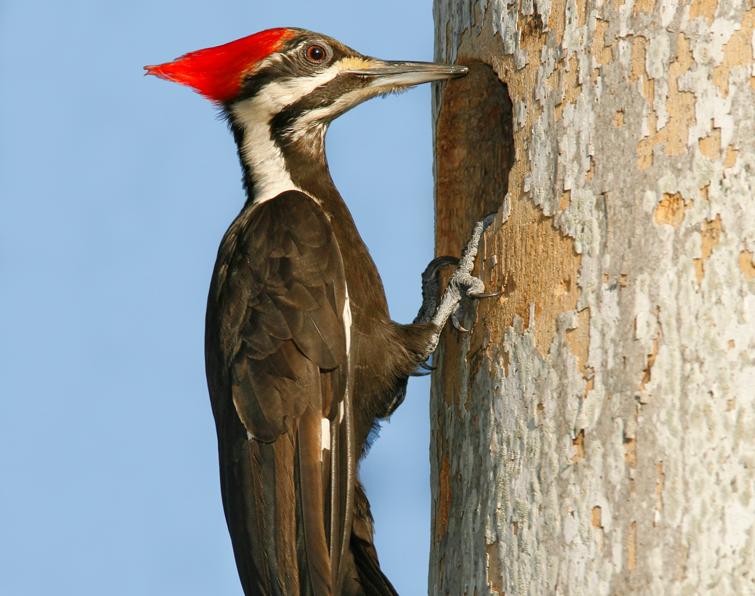
Keep your pecker up!

Image result for the woodpecker owes his success 
 ‘Even the woodpecker owes his success to the fact that he uses his head and keeps pecking away until he finishes the job he starts.’ (Coleman Cox)

Maybe it’s the perpetual grey, the drizzle or the cold that even on the milder days seeps into your bones; the last few weeks have been tough.

I’ve always worked well with deadlines, but it is much harder when these are self-imposed. I have always enjoyed balancing a number of (usually unrelated) activities in life and my new routine is no exception. With such variety it can be hard to see whether progress is being made and whether each task is worth the time and effort that it takes.

Aristotle extols the benefits of developing virtues in order to truly flourish. One of these is courage. In Aristotle’s teaching this is more than being brave; it also means to endure.
 ‘Change is hardest at the beginning, messiest in the middle and best at the end.’Robin S. Sharma


The difficulty is, not knowing the stage you’re at. School gives very tangible markers for progress. Ticking off the lessons, counting down the days to exams or till the beginning of the holidays, each one provides boundaries as to where one is in the endurance test of education. Persevering is not necessarily easy but you can see where you’re going and how long it’s going to get to take there.

Life consists of markers too, but sometimes the timing is off. For a number of friends the milestones of marriage or having a baby have not come at the time they would wish. In such circumstances it is difficult to know whether to give up or to endure, hoping that your time will come.

Persevering when the outcome is uncertain is tough. The mantra to keep on keeping on sounds hollow and going back to what is safe looks inviting. It is often the case that hindsight allows us to see that progress was being made. It is when we look back we see the glimmers of hope or success.

I saw my first snowdrops this week and made a plan to see if any had appeared in the garden. As it was sunny, I decided I would do some gardening as well as look for snowdrops. Initially I didn’t see any, it was only as I stepped back to look at the improvement my weeding had made that I saw the tinniest strands of green bending under the weight of the white bells. It is worth taking time to search for the snowdrops, to stand back and really look. 


‘Prepare’ and ‘Reflect’ are my new action words. I have diversified my reading since leaving teaching and have a spiritual, fictional and philosophical book on the go at all times. I often start the day with a chapter from my spiritual book. I sometimes think ‘I don’t have time, I need to get on.’ Yet, when I take the time, not only to read but to consider and write down any thoughts, the rest of the day always seems more productive. I now view this time as ‘preparation’ for the day.

A while ago my husband decided to write down any events that made us happy or grateful on a piece of paper. These were kept in a box and at the end of the year we went through the papers. There was joy in remembering these times together but also surprise in how much we had forgotten. It is all too easy to gloss over or forget the good moments, but I think these things fuel our endurance, so that during the harder times, it is easier to see that ‘this too will pass’. I think I am going to reintroduce this, if not for the two of us, then definitely for me.


How do you keep persevering?
How important is endurance when it comes to being courageous?
What helps you enjoy the journey when the destination seems out of reach?
 

Friday, 27 January 2017

The Power of One


I was a little disturbed to read on the front page of the papers this week ‘May says US and UK can lead the world again.’ Whilst I’m not entirely sure of her motives behind saying this, it smacks of bravado and making the best of a bad situation. I’m not prepared to make any further criticism; she is in a tough position and I would never want to swap places. With our political and economic situation looking so uncertain it is easy to focus on the bleakness of our nation and despair.

I have never studied Aristotle as a politician, only as an ethicist and empiricist, but I can see he took a holistic view of all that he observed and considered. For him, politics was not about status or power but about achieving eudaimonia. This was the purpose of politics as far as he was concerned, it is ‘the business of the lawgiver to create the good society.’ (The Politics)

My feelings of bleakness and despair initially took a further dive following a number of articles about the problem of homelessness in the UK.
Then I came across this:

I love it. Someone thought creatively, had an idea and acted on it. Then because of the thoughts and actions of one person, others joined in. If I look at the nation, at things globally, I feel helpless. I question my role, as whatever I can do seems invisible and insignificant. Sometimes the big picture clouds a thousand smaller images that could bring change. I was inspired by another of Aristotle’s thoughts: ‘A state is partnership of families and clans living well and its object is the full and independent life.’ (The Politics) I wonder what it would look like if we were given the chance to partner with our government, with one another to create a good society. Regardless of the actions of the government we still have the choice to partner with one another.

The impersonal hand of government can never replace the helping hand of a neighbour. 
(Hubert Humphrey)

Since moving four years ago, it has been our desire to involve ourselves in the local community. With both of us having full-time jobs elsewhere, this was practically very difficult. We tried a ‘house warming’ with neighbours in our street; very few came but those that did appreciated the effort. Other ideas have also been unsuccessful, part of the reason maybe that many people stay here their whole lives and often their children do too. There is a village mentality, which means that time will really make a difference.

Earlier this month I started a new project. Having written about the importance of time for oneself and the benefits of ‘being’ rather than ‘doing’, I decided to facilitate time and activities that would enable people in our locality the opportunity to do so. I’ve set up a weekly time for people to enjoy free coffee & cake, take part in an art activity and enjoy some quiet time through sensory meditation. At our last gathering we nearly hit double figures, but numbers are not really important. It was so special to hear people saying that they had connected with people they would never normally have time to chat with. I loved seeing people rediscover that child-like joy through creating art with sweets, shaving foam, water and food colouring!

Each of us has a gift, a skill; if these remain unused, our communities are a little darker and colder. It is hard sometimes admitting we have need of one another, but it is a reciprocal relationship; as we give, so we receive.

We can begin by doing small things at the local level, like planting community gardens or looking out for our neighbours. That is how change takes place in living systems, not from above but from within, from many local actions occurring simultaneously.
(Grace Lee Boggs)


 You and I may just be drops in a vast ocean, but we can cause a ripple effect and who knows where it can end?

Saturday, 21 January 2017

The Benefit of the Doubt


Doubt generally conjures up negative connotations. We link it with mistrust and feel offended if the doubt is directed at us. In the arena of faith, doubt is often seen as its direct opposite, yet many who express deep faith profess to have doubts and find comfort and even impetus through them.

Doubt isn’t the opposite of faith; it is an element of faith.’ (Paul Tillich)

If you would be a real seeker after truth, it is necessary that at least once in your life you doubt, as far as possible, all things.’ (Rene Descartes)

Descartes, who is probably more famous for his ‘I think, therefore I am’ quotation than the one cited above was the Father of Cartesian philosophy – the idea that all existence should be questioned in order to be understood. Whilst we could get caught up in a mind bending exercise to argue that this is not some dream existence (although perhaps after Trump’s inauguration yesterday, some people wish it was), I am happy for now (especially as I write) to assume both your existence and my own.

Asserting doubts is the beginning of self-autonomy. As toddlers our common refrain would have been ‘why?’ I remember the common response being ‘because I said so!’ This response is the reassertion of dominance. For some level the toddler is questioning the knowledge and authority of the parent. Whilst dealing with this can be frustrating it is a necessary path to curiosity and independent thought.

In a world of post-truth perhaps doubt and questioning are our greatest allies. The educational system in this country is being blamed for not nurturing critical thinkers and independent learners but surely this is something we could all do with developing further. Tweets and posts have become ‘gospel truth’ that we either choose to believe or ignore. Perhaps we need to give less credit and time to gossip columnists and social commentators and instead give more attention to those who are prepared to question the status quo.

During this last week I went to see Martin Scorsese’s ‘Silence’. I was really impressed by Andrew Garfield’s portrayal of a Jesuit priest. I then discovered that in preparation for the film he completed the Ignatian Spiritual Exercises. In a recent interview he was asked about faith and whether he had doubts about God and the after-life.
‘…And I think a life of faith is not a life of certainty. A life of faith is a life of – of doubt. And I think it is so healthy to doubt. It’s so health to doubt oneself, it’s so healthy to doubt any assumption we make about how to live. And I think – what I say when – what I mean when I say certainty scares me, certainty starts war. Certainty starts war on behalf of ideology. Certainty of the ‘I – I know and you don't.’ That's the scariest thing to me and what – what a human being is capable of doing.’

This is the kind of doubt I think we could all do with considering. Doubt that questions my assumptions. Doubt that allows for your view as much as mine. 


What do you think? 
What are the benefits of doubts? 
Would critical thinking benefit teenagers, our society?

Saturday, 14 January 2017

Shall I compare thee...

...to me?!
I came across a newspaper article recently, in which Daisy Lowe was being unfavourably compared to Emma Forbes. Both had been papped in their swim suits whilst on holiday and were being critiqued for their choice of swim-wear. I was a little incredulous that this sort of article still made the news, but was reminded in the last few days that there is still appetite for this kind of critiquing with the current flurry of award ceremonies. This is peak time for the appraisal of celebrity fashion and the shaming of those who commit fashion faux pas.

Despite collaboration being the buzzword in business and education we are still fuelled by competition. I get the argument: competition spurs on excellence and innovation. Many would also argue that competition is part of our Darwinian heritage, but it strikes me that with the advancement of technology, the need for competition in order than I might live or reproduce are no longer required. Whilst I can see there will always be competition in the world of work and sport, my concern is that I apply the same competitive nature to my life. This leads to a false and unhealthy comparison with others.

Whilst encouraging a friend to step out into a new project, I feel fearful I am getting left behind. I want to be the one who rejoices at their victories and weeps at their losses but all too often another’s victory leads to my own self-doubt and a mental side-ways glance to see how I am measuring up.

Aristotle’s proposal for the good life is through the development and application of virtues. He believed the flourishing of the individual would inevitably lead to the flourishing of society. Sounds good, but working out the reality of this is hard and even modern philosophers disagree with how this can be achieved. One of his ideas, which I love, is the virtue of friendship. To want the best for your friend without the motivation to benefit oneself is a high bar to set, but I believe one worth reaching for. Where is the place for competition in friendship? One might argue that there is no place, surely competition would lead to jealousy, upset and perhaps even relationship break-down. An American philosopher, Richard Kraut believes that there is a place for competition within friendship and virtue ethics. He calls this ‘moral competition’. This is the idea that there can be rivalry when being virtuous. However, this does not lead to the traditional ‘winners and losers’ in competition. Everyone is a winner as when an individual succeeds in acting virtuously, not only does that person benefit but also the people around them. If the act is truly virtuous then it should benefit all involved.

I’m not sure I’m totally convinced – it seems so easy to fall prey to pride or smugness in this kind of competition. It is all rather dependent on my definition of virtuous which is something hotly debated amongst modern philosophers.

Psychologists explain that female competitiveness is a result of a Darwinian compulsion to be impregnated by the best man. This seems an outdated, uncomfortable notion, yet the comparisons continue.

When our value is left in the hands of another, what are we left with but comparison and competition? When this competitive spirit takes hold of us we end up living in a small, limited world. The truth is the world is bigger than we imagine and we are greater than we can conceive. In a world without competition, without the threat of losing, who could you be?


What are the benefits of competition?
To what extent do you think collaboration a good alternative to competition?
What tips do you have for combating the competitive spirit that compels us to make comparisons?


Friday, 6 January 2017

Trying is not Failing


Making New Year’s resolutions appears to have gone out of fashion – people tried it and it was too hard. However, change (and for the better) seems to be on everyone’s agenda. So many were looking forward to saying ‘goodbye’ to 2016 and are looking for positive ways to tackle 2017. There has been a great emphasis on authenticity and transparency. The recent trend of no makeup selfies seems to be a visual demonstration of this desire for authenticity. At the beginning of the year Susanna Reid, followed this trend and posted comparison selfies on Instagram at the beginning of the year. In one she is ‘TV ready’ with full makeup and in the other she is ‘Susanna in real life’ – no makeup. She then wished people a ‘Happy Being You Year’.

What does the real you look like? I don’t really mean without physical makeup. The truth is that we all put on a non-physical kind of make-up to portray who we wish to be, or who we perceive others think we should be. This may affect how we look, but it has an even greater internal impact. For me it is about which voices I choose to listen to. There are so many voices vying for my attention. If I listen to the voices of the past I am paralysed in the present and if I focus on the future it is hard to move forwards.

There is a constant internal battle going on which questions my ability to make progress. This didn’t start when I started writing; it’s been going on for years and in different areas of my life. Everyday, and definitely more than once, I have to talk to myself to keep going in a positive direction. Sometimes it is exhausting.

About six months ago I started creating an inspiration wall in the room I now write in. On the wall I put up pictures, quotations, anything that would encourage me to keep going rather than give up. My New Year’s resolution started in September and I am not giving up. I am going to continue to cultivate that positive voice.  

This Christmas was difficult. It felt like I ran into a number of ‘old voices’ some that I thought I could easily ‘shout’ over, but it turns out words still hurt. I feel mentally as though as I have had flu; drained and washed out. I am over the worst but it is a struggle to keep going, I am lacking the energy and inclination to do so.

What holds us back from keeping our resolutions? Probably a number of things:
  • The reward to complete it is not as great as the current situation
  • Lack of self-belief
  • The wrong voice talking more loudly or more frequently
  • The wrong voice was what started this – it is the wrong goal
  • The trigger to get started is missing
And when it goes wrong, we assume THIS IS FAILURE. It is not. We can be our own worst critics. One of the things I have started to tell myself is, ‘trying is not failing’. New Years are annual – obviously, but resolutions don’t have to be. Everyday begins anew, a fresh start, a chance to try again


One of my favourite quotations on my inspiration wall is: ‘Put your big girl panties on, cowboy up and get the job done. No one else will do it for you.’ I’m not quite sure why, but when I read it I smile, it cuts through the crap going round and round in my head and I get to start again.

What are your New Year resolutions?
What ways have you found to silence the voices?
What encourages or inspires you to keep going?